How do I “do” AI in my business?
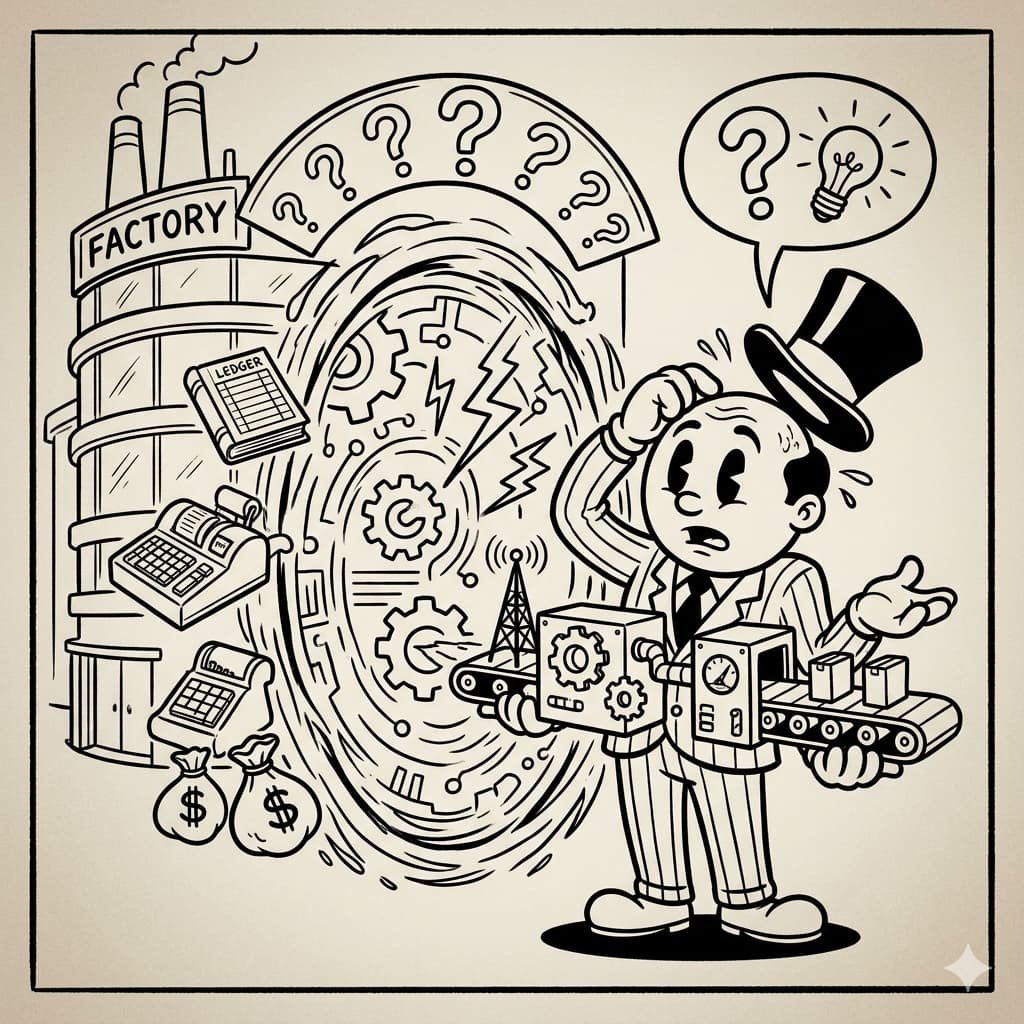
Most weeks someone asks me this. Sometimes in a workshop, sometimes over a coffee, sometimes in a hallway after a talk. The phrasing changes a little. The question doesn't. How do we get going with AI? Which platform should we pick? What should we be doing first?
I never answer it directly. Not because I don't know, but because it's almost never the right first question.
Two reports landed this month that say the same thing, from different angles. The AI Forum NZ released the third edition of the AI Blueprint for Aotearoa. EY published its second annual Global AI Sentiment Survey, off the back of 18,152 responses across 23 markets including New Zealand. Both leave you with the same line, in different words.
AI Forum NZ: "High-use, low-trust."
EY: "Trust has not kept pace with capability."
Same diagnosis. The tools have raced ahead of the work that's supposed to sit around them. And the question most New Zealand businesses are asking right now (which tool, which platform, which licence) was the right question 18 months ago. It is not the right question today.
What the numbers actually say
From the AI Blueprint:
-
2.7% of the NZ workforce qualify as AI practitioners with AI embedded in their workflows.
-
97% are using AI superficially or not at all.
-
79% of NZ employers don't know how to implement an AI workforce training programme.
-
90% of those same employers expect to be using AI-powered solutions by 2028.
From EY's global survey:
-
16% of people globally have used AI systems that act on their behalf, without human intervention, in the past six months.
-
7 in 10 agree human oversight remains essential.
-
67% say they'd trust AI more if reviewed for safety and fairness by an independent group.
Hold those two pictures next to each other. Your people are already using AI. A meaningful slice of them have started letting AI act on their behalf, not just suggest. Almost everyone still wants human oversight. Very few employers know how to provide it. That is what the landscape inside your business looks like right now, whether or not anyone has said so out loud.
EY also groups markets into Pioneer, Transitional, and Lagging tiers. India, Singapore, China, Saudi Arabia and the UAE sit at the front. New Zealand is not on that list. That isn't a panic-button finding. It's a finding that should keep us honest when we tell ourselves we're world leaders in AI.
The question behind the question
When someone asks "how do I do AI in my business?", they're usually really asking one or more of these:
-
Where should we actually start?
-
How do we avoid wasting money on tools we won't use?
-
How do we keep ourselves out of trouble?
-
How do we bring the team along instead of leaving them behind?
None of those are answered by picking a tool. They're answered by doing the work the tools sit on top of.
The shape of that work is the old people-process-technology stack, in that order. The Blueprint says it plainly: the next phase of AI adoption "won't be determined by access to technology alone. It will be shaped by how well organisations, government, and society address trust, skills, and governance alongside continued use."
So the question I'd ask back, every time, is not "which AI?" but three sharper ones.
The three questions to ask first
Where in the business do you actually need it?
Not "where could we use it?" Where is real time leaking? Where is good judgment getting buried under low-value admin? Where is your team already quietly using ChatGPT on personal accounts because the official answer is "we'll get to that later"? Start where the work is. The tool follows.
Who owns the outcomes?
Not who owns the project. Who owns whether the work has actually changed six months from now. If the answer is "IT", or "the AI champion", or worse, "the consultant", you've got a sponsorship problem before you've got an AI problem. Outcomes need a name and a job description attached to them.
What would good (and not-good) look like?
This is the governance question and the trust question in plain clothes. Before you turn anything on, get clear on what you'd want to see if it went right, and what you'd not want to see if it went wrong. The 16% who've already delegated to agents didn't ask these questions first. The next 16% should.
Lead with experience, not promises
If you take only one thing from the two reports, take this one. The Forum's view is that the next phase of adoption is "shaped by how well organisations address trust, skills, and governance alongside continued use." EY's first recommended leader action is "lead with experience, not promises." They're saying the same thing.
The way you build trust isn't by writing a policy. It's by getting your people using the tools deliberately, with review and override built in, and learning from what actually happens. Policy follows practice. Trust is a practice, not a memo.
That's why training-only doesn't stick. It's why a workshop in March produces no different behaviour by August. And it's why most of the work we do at Cairn isn't about picking AI tools. It's about the people and process scaffolding that turns "we have Copilot licences" into "we genuinely work differently."
So where do you start?
If you're seriously asking "how do I do AI in my business?", the first useful move is to be honest about where you actually are. Not where you'd like to be. Not where the vendor pitch put you. Where you genuinely sit across strategy, people, data, technology, process, governance, training, and NZ-specific readiness.
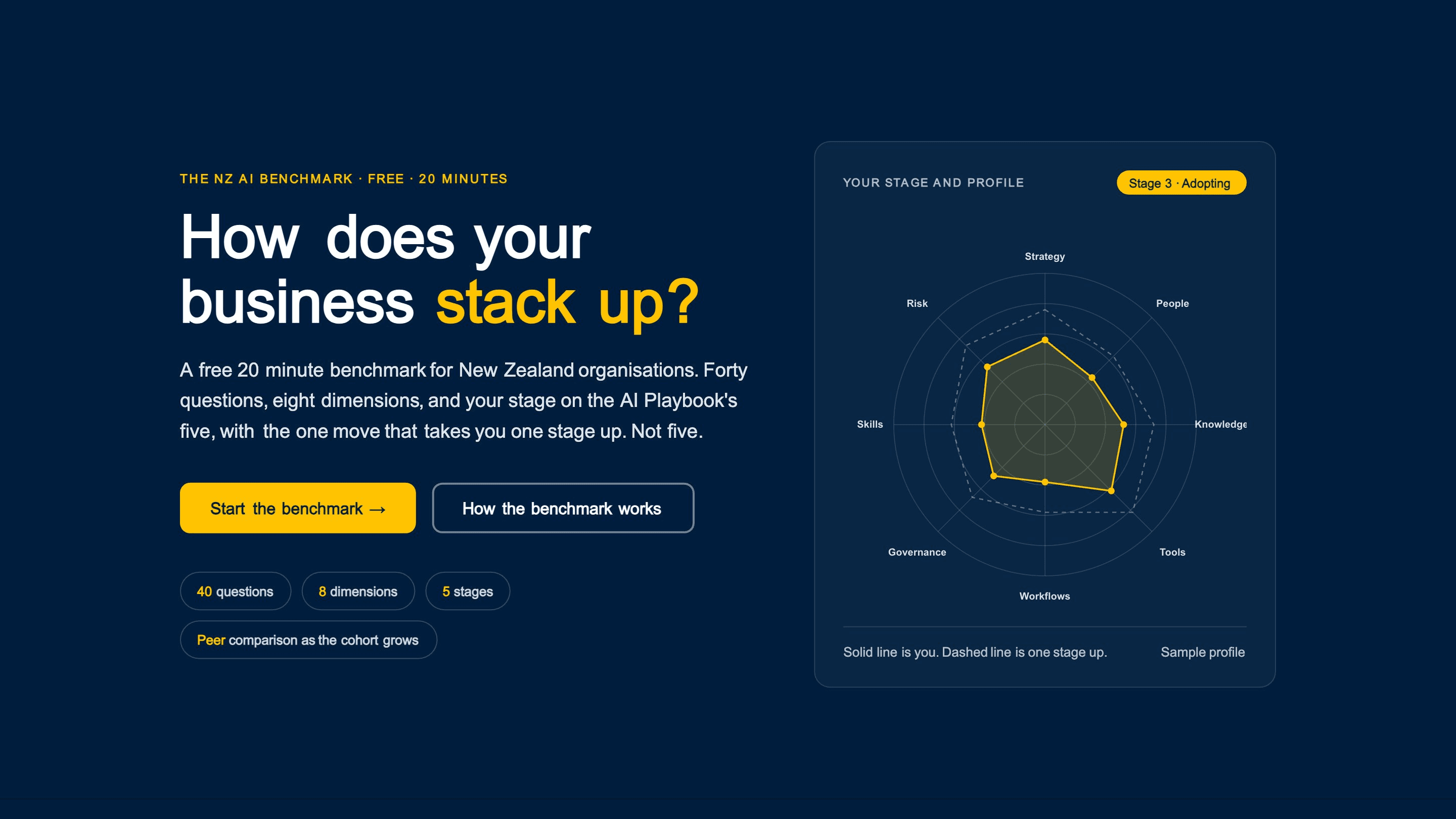
That's what Cairn Compass is for. Forty questions, about 20 minutes, no sign-up needed to see your results. It's free, and it tells you where the gap is and where to put your next dollar of effort.
The tools are not the hard part anymore. The work around them is. Start there, and the "which AI?" question quietly answers itself down the track.
If you'd rather just have a conversation about your own situation, give me a bell.