AI Consulting in New Zealand: What to Expect in 2026

A few weeks ago I sat across from a business owner in Dunedin whose company has been growing steadily. They’d been adding AI products and add-ins here and there over the past year, watching their monthly subscription bill climb. We had the leadership team around the table and they widely admitted that almost none of them were actually using these expensive new tools.
It’s a conversation I’m having more and more. Businesses aren’t short of AI subscriptions. They’re short of clarity on what to do with them.
The state of play
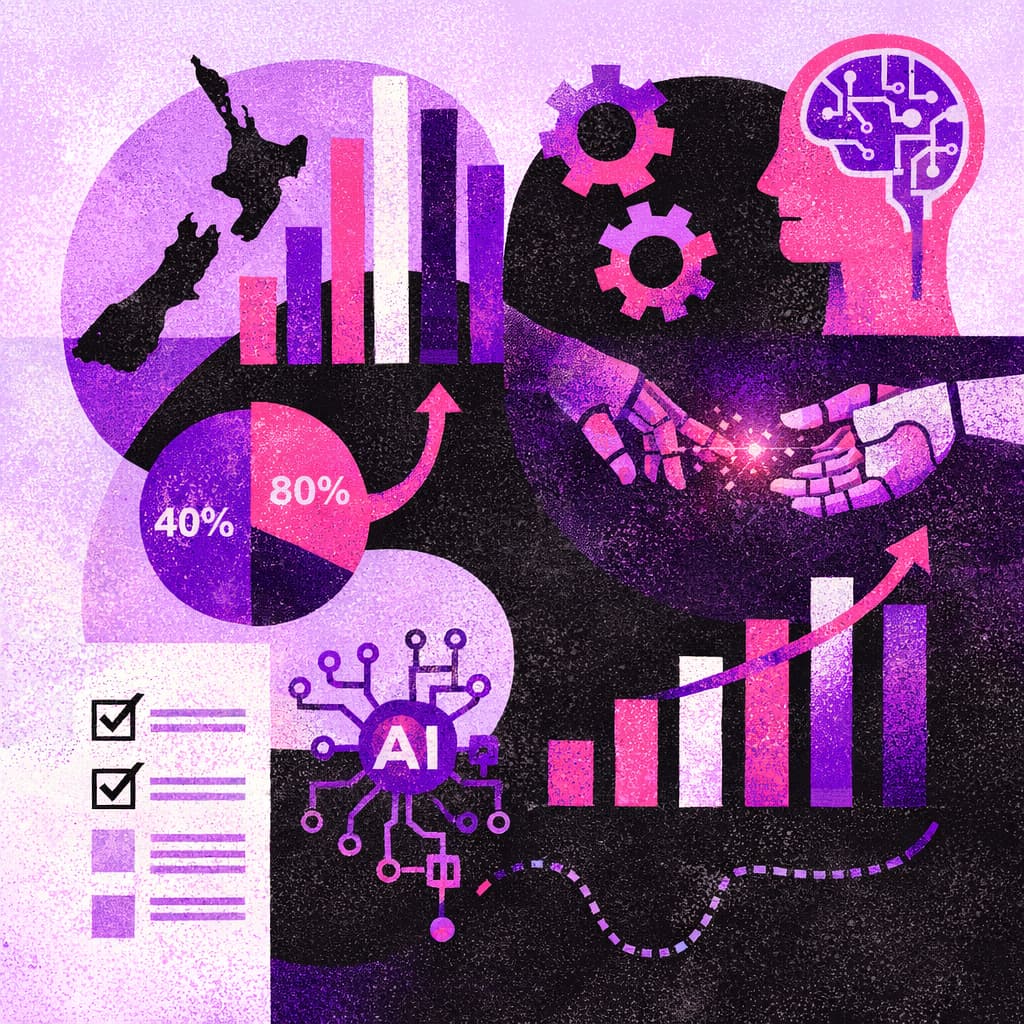
AI adoption in Aotearoa has moved fast. By 2025, over 80% of New Zealand organisations reported using AI in some form. That sounds impressive until you look closer. Among businesses with fewer than 200 employees, nearly half have no plans to adopt AI at all. And of those that have started, many are stuck in pilot mode: a ChatGPT subscription here, a Copilot licence there, but nothing connected to how the business actually runs.
The gap isn’t between businesses that use AI and those that don’t. It’s between those genuinely redesigning how work gets done and those treating AI as another tool to bolt on. AI is becoming a competitive divide, not just a technology decision.
That’s where consulting comes in. Not to sell you a product, but to help you figure out where AI fits, what to prioritise, and how to actually make it work for your people.
There’s a fair bit of mystery around this, so let me be direct.
A good AI consultant starts by listening. They look at your team, your processes, your pain points, and your goals. They’re not there to pitch a tool. They’re there to understand the terrain before recommending a path.
Typically, an engagement looks something like this:
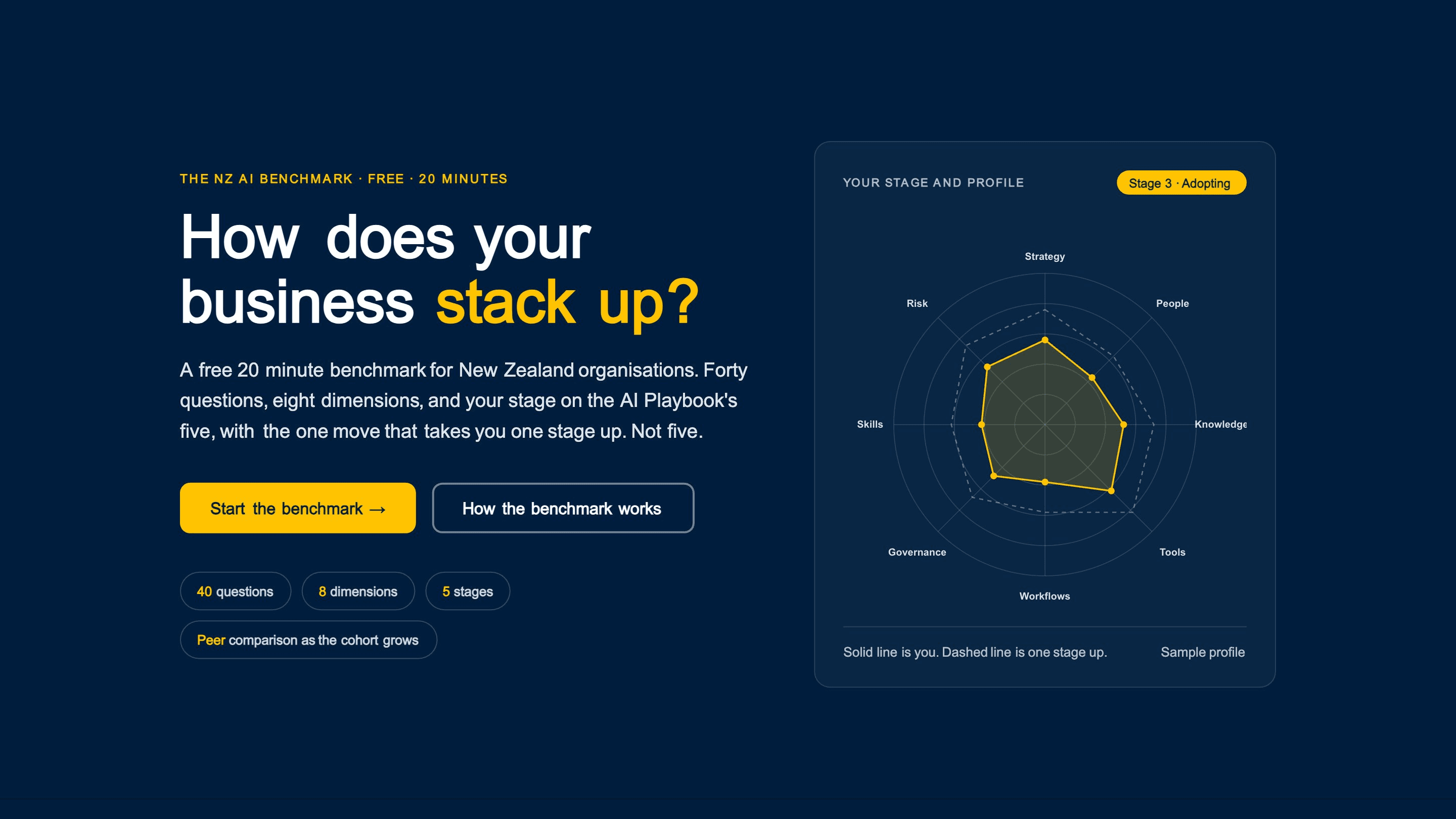
Discovery and assessment. Understanding where you are today. What’s working, what’s creating friction, where the opportunities sit. At Cairn, we use our EDGE framework to assess AI maturity across people, process, and technology. We also built Cairn Compass, a free online assessment that gives businesses a starting picture of where they stand.
Workflow mapping. This is the step most consultants skip, and it’s arguably the most important. Before you can know where AI fits, you need to understand how work actually flows through your business. At Cairn we use CAMP (Cairn Action Mapping Process) to map out the real workflows, not the ones in your process documents, but the ones your team actually follows day to day. It’s the difference between guessing where AI might help and knowing. That Dunedin business I mentioned? Once we mapped their workflows, the answer became obvious: three roles were doing the same data entry in slightly different ways. No AI tool was going to fix that without sorting the process first.
Strategy and roadmap. Once you understand the landscape and the workflows, you can plan the route. This means identifying use cases, prioritising them (we use a simple now/next/later approach), and building a roadmap that’s practical, not aspirational. A good roadmap fits on one page and can be explained to a board in ten minutes.
Implementation support. This might mean running training workshops, deploying Microsoft Copilot across your team, building custom AI agents for specific workflows, or providing ongoing virtual CIO support. The scope depends on what you need.
Capability building. The goal is never dependence. A good consultant builds your team’s ability to keep going after the engagement ends. That might be upskilling sessions, internal champion coaching, or lightweight change management support.
This is the question everyone wants answered and few consultants are upfront about. So here goes.
In New Zealand, independent AI consultants typically charge between $200 and $350 per hour. Fixed-fee project engagements are increasingly common and often better for both parties: you get budget certainty, the consultant is rewarded for efficiency rather than hours.
A discovery and roadmap engagement for a mid-size business might run between $10,000 and $30,000 depending on complexity. A focused workshop or training programme could be $2,000 to $5,000. Ongoing advisory retainers vary, but $3,000 to $8,000 per month is a typical range for part-time virtual CIO or AI advisory support.
Here’s the part most people don’t know about: the New Zealand Government will co-fund up to 50% of your AI consulting costs, capped at $15,000 per business. The AI Advisory Pilot, launched in January 2026 through the Regional Business Partner Network, is specifically designed for SMEs. It funds a tailored AI plan delivered by an approved consultant. If you haven’t looked into this, you should. It significantly changes the economics of getting started.
Not all AI consulting is created equal. Here’s what I’d look for:
Independence matters. A growing number of businesses are turning to independent consultants over vendor-aligned firms, and for good reason. If someone’s primary revenue comes from selling you Microsoft licences or a specific AI platform, their advice will naturally lean that way. Look for someone who’s genuinely vendor-neutral in their recommendations, even if they have technology preferences.
Ask about their process. A credible consultant can walk you through exactly how they’d approach your situation before you sign anything. If the answer is vague or jumps straight to a product demo, keep looking.
Look for local context. New Zealand’s business environment is different from the US or the UK. Our SME-heavy economy, our regulatory landscape, our workforce culture: these all shape how AI adoption should work here. Someone who understands the Kiwi context will save you time and money.
Check for breadth. AI consulting isn’t just about the technology. It’s about people, change management, governance, and business outcomes. If a consultant only talks about algorithms and models, they’re missing most of the picture.
Ask what happens after. The best consultants build your capability, not your dependence. Ask how they plan to hand over and what your team will be able to do independently when the engagement ends.
A few things that should give you pause:
Promises of specific ROI figures before they’ve seen how your business operates. AI outcomes depend heavily on context, and anyone quoting returns before discovery is guessing.
Engagements that start with technology selection rather than problem definition. The tool should follow the strategy, not the other way around.
No mention of your people. AI adoption is fundamentally a change management exercise. If training, communication, and team readiness aren’t part of the conversation, the implementation will struggle.
Pressure to move fast without a plan. Speed matters, but not at the expense of direction.
If you’re reading this and thinking “we probably should be doing something about AI but aren’t sure where to begin,” you’re in exactly the right place. That’s where most of the businesses I work with start.
Here’s what I’d suggest:
Take five minutes to complete the free AI Maturity Assessment at Cairn Compass. It gives you a clear picture of where you stand across the key dimensions and suggests practical next steps. No sales pitch, no email required.
Then, if you want to go further, have an honest conversation with an independent consultant. Not a vendor demo. Not a webinar. A conversation about your business, your challenges, and where AI might genuinely help.
The government co-funding means there’s never been a more accessible time for Kiwi businesses to get proper AI guidance. But the pilot won’t run forever, and the businesses that move now will have a meaningful head start.
The terrain is changing fast. A cairn on the trail helps you see where you are and where you’re heading. That’s what good consulting should do too.